








Double-skin casing
50 mm panels filled with 70 kg/m³ rock wool. Gaskets separate the inner and outer skins, so no metal runs straight through the panel. Tested to EN 1886: strength class D2, casing air leakage class L1.
Air handling & heat recovery
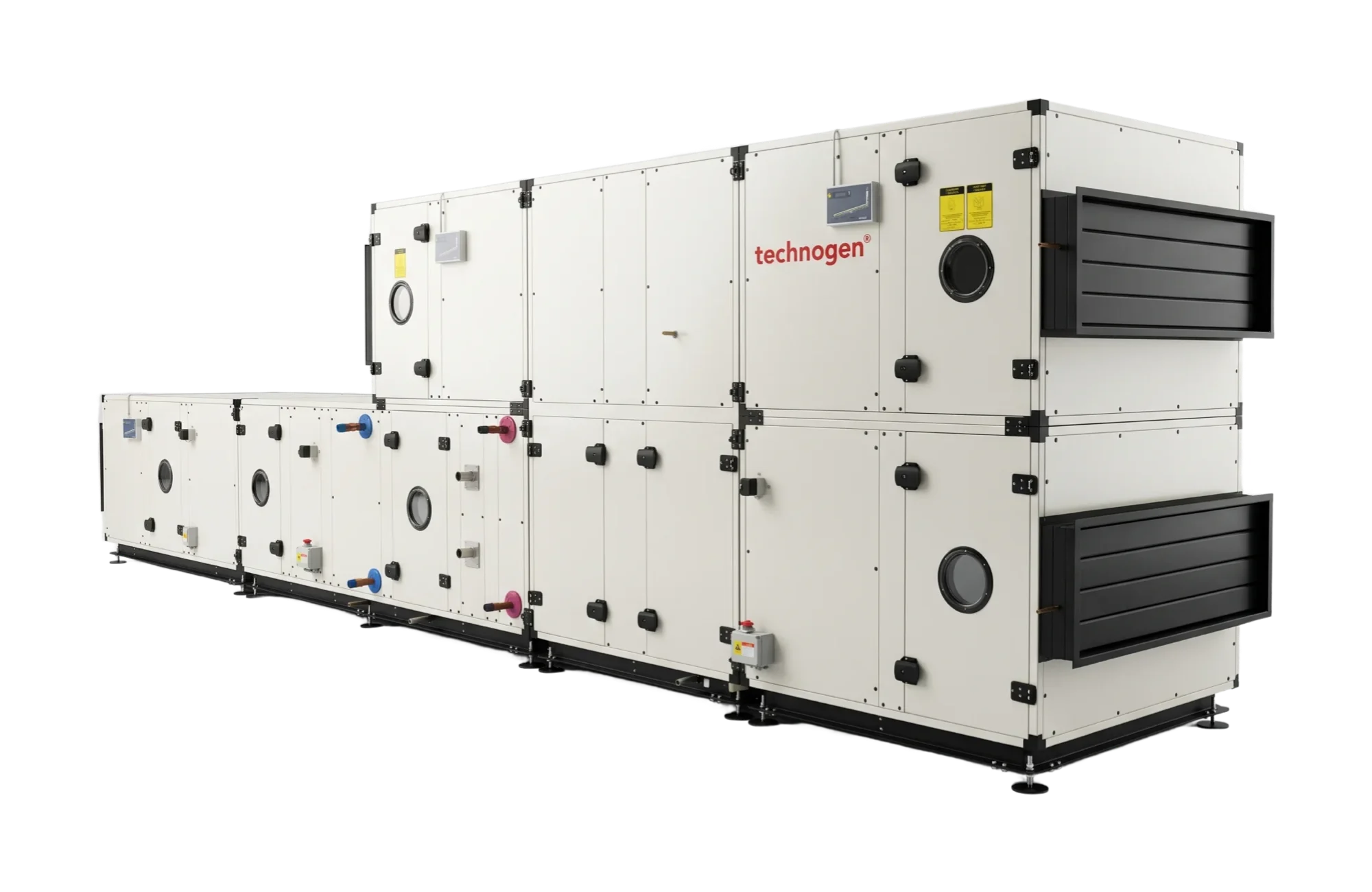
Technogen is an HVAC manufacturer of energy-efficient air handling units, heat recovery ventilation, fan coil units, indoor swimming pool dehumidifiers and commercial kitchen ventilation. Every system is engineered and built in-house to improve indoor air quality, cut energy use and perform reliably in commercial, industrial and residential buildings. HEROS air handling units are tested to EN 1886 and Eurovent certified.
Who we are
Technogen is an HVAC manufacturer that keeps engineering, production and testing under one roof, so every unit you specify comes with documented performance.
About Technogen →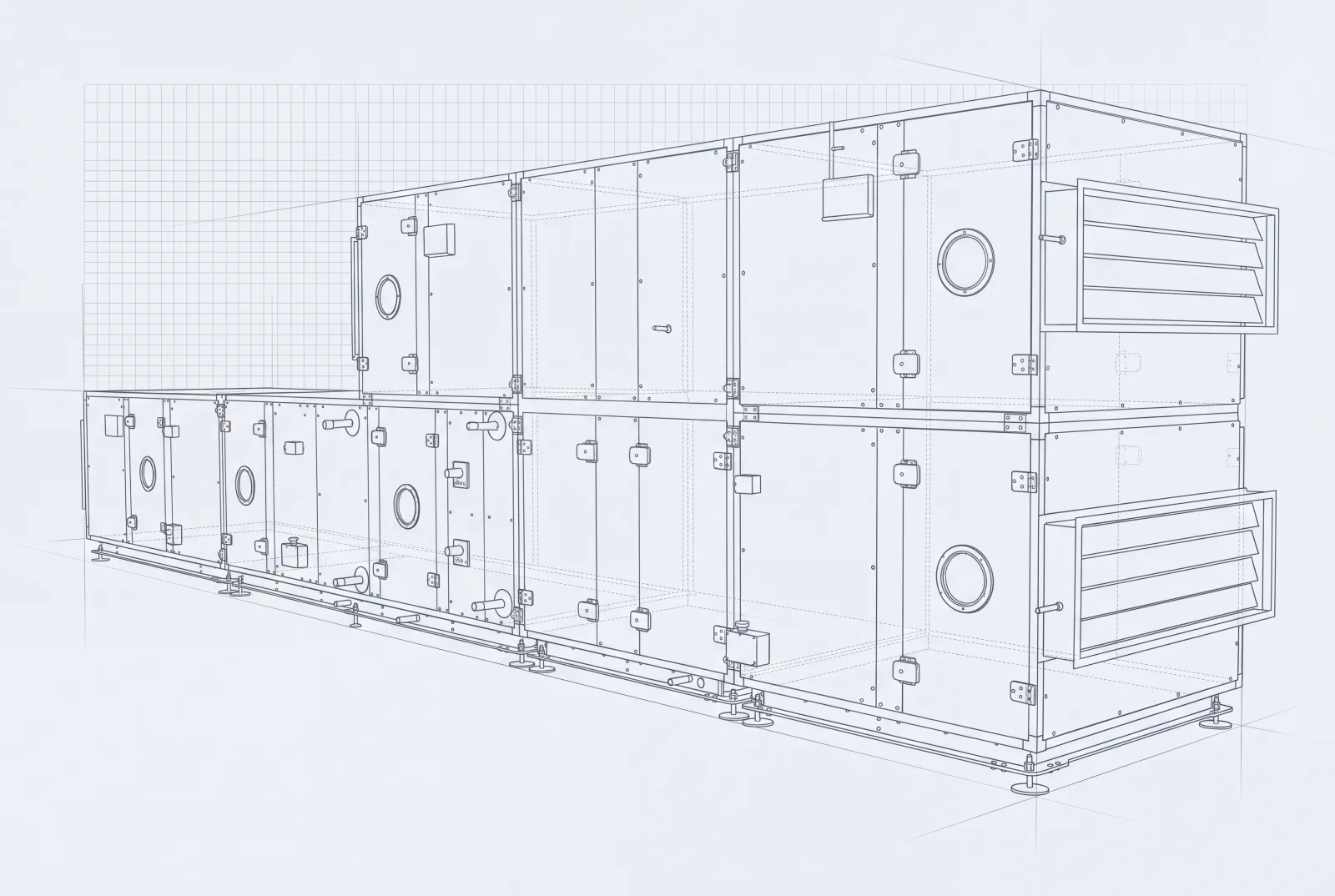
Our R&D team develops every product line, and our engineers size HEROS units in Technogen’s own selection software.
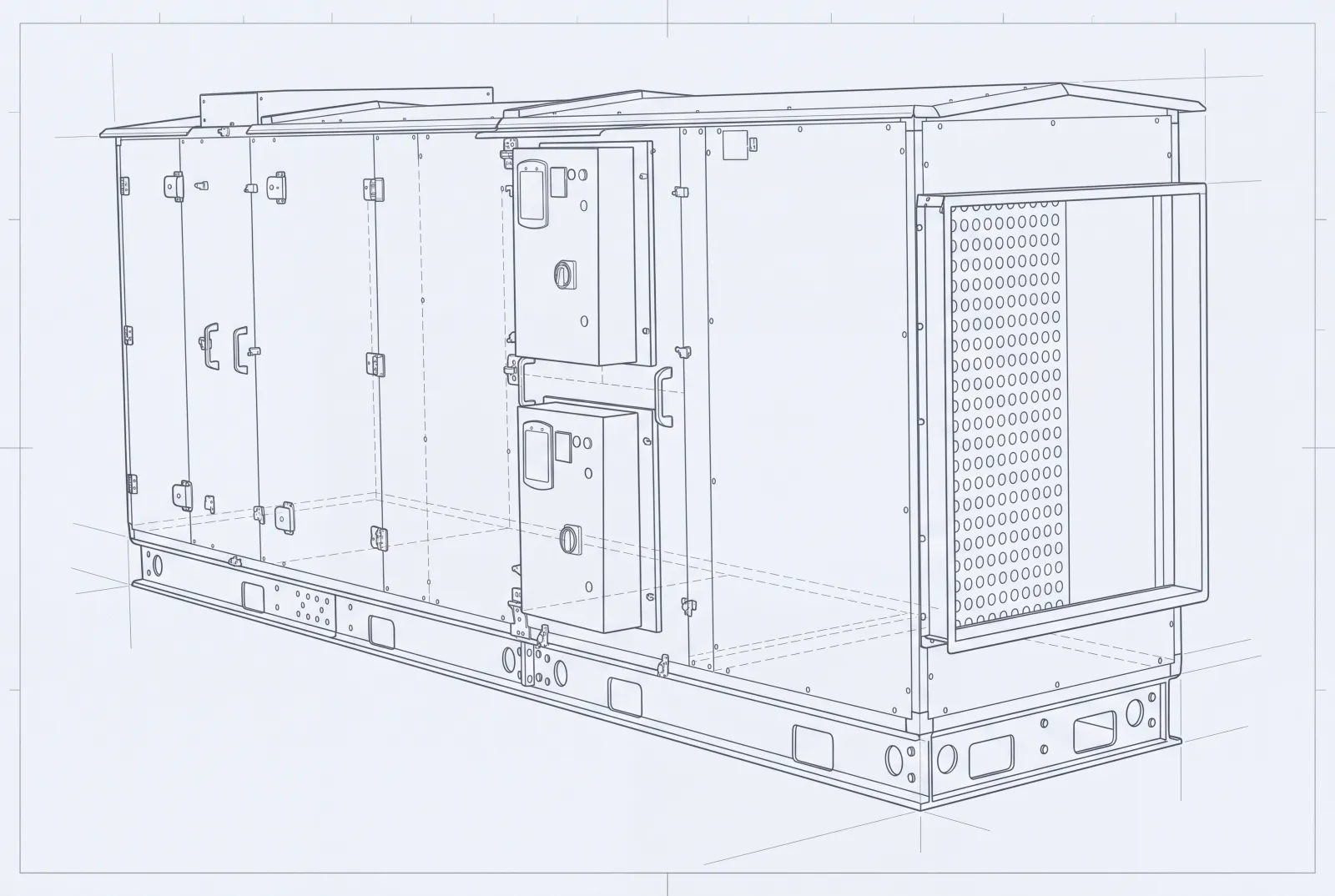
ISO 9001-certified production with certified components, in Technogen’s own factory.
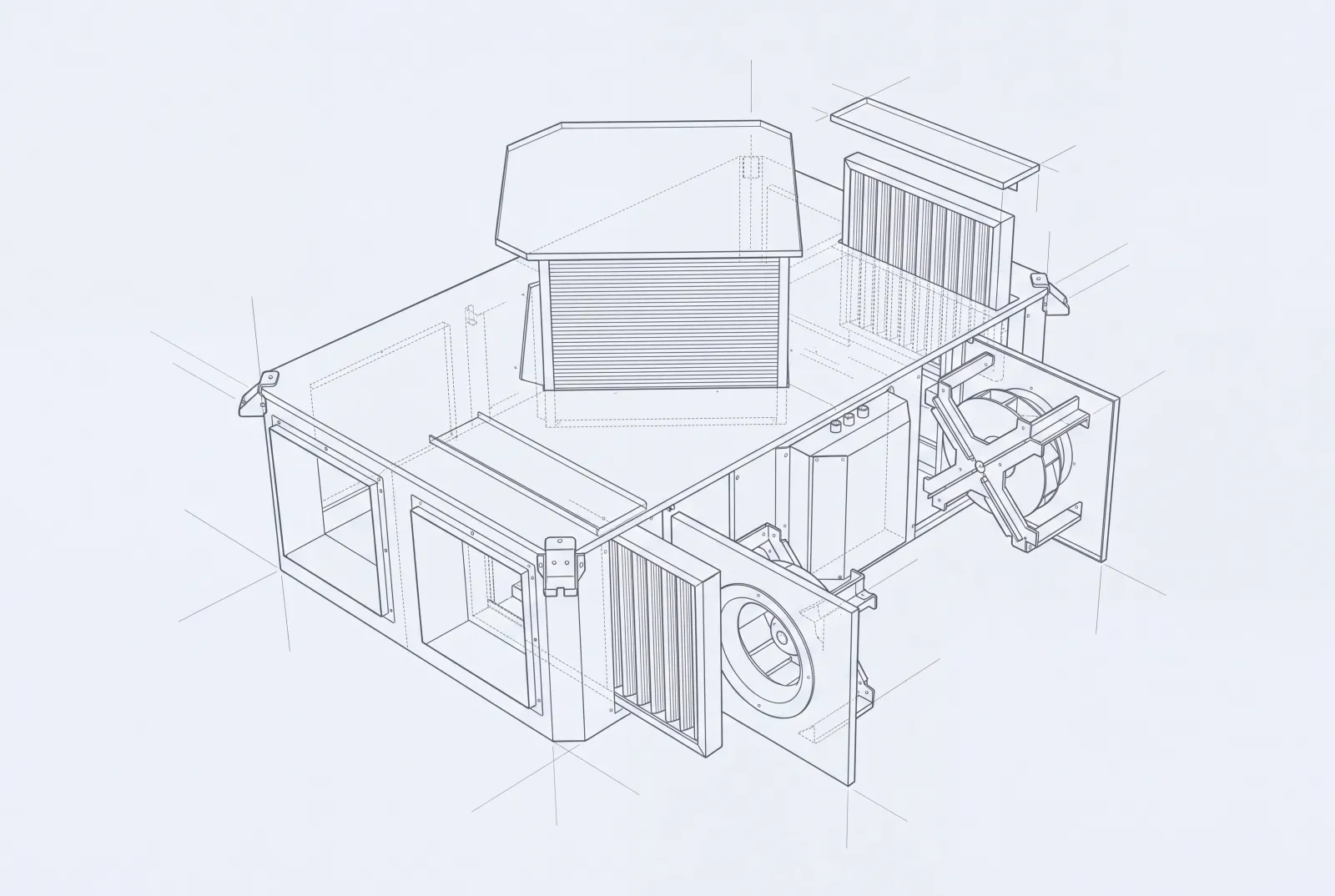
Every coil is pressure-tested before it leaves the line, and HEROS casings are tested to EN 1886.

HEROS, Superair exchangers and Zenair.
Audited quality management.
EU declaration of conformity.
HEROS casings, classes D2 and L1.
01Portfolio
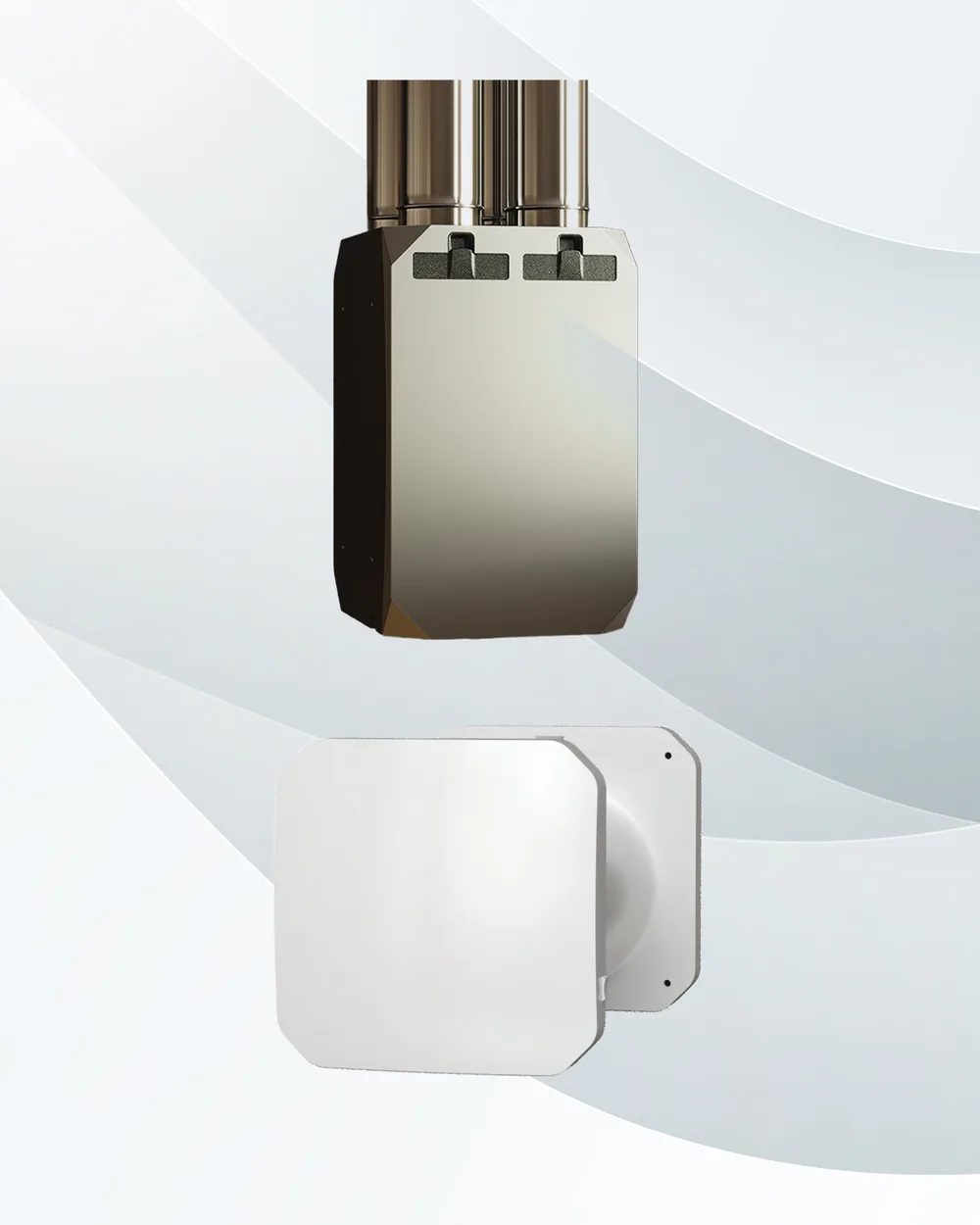
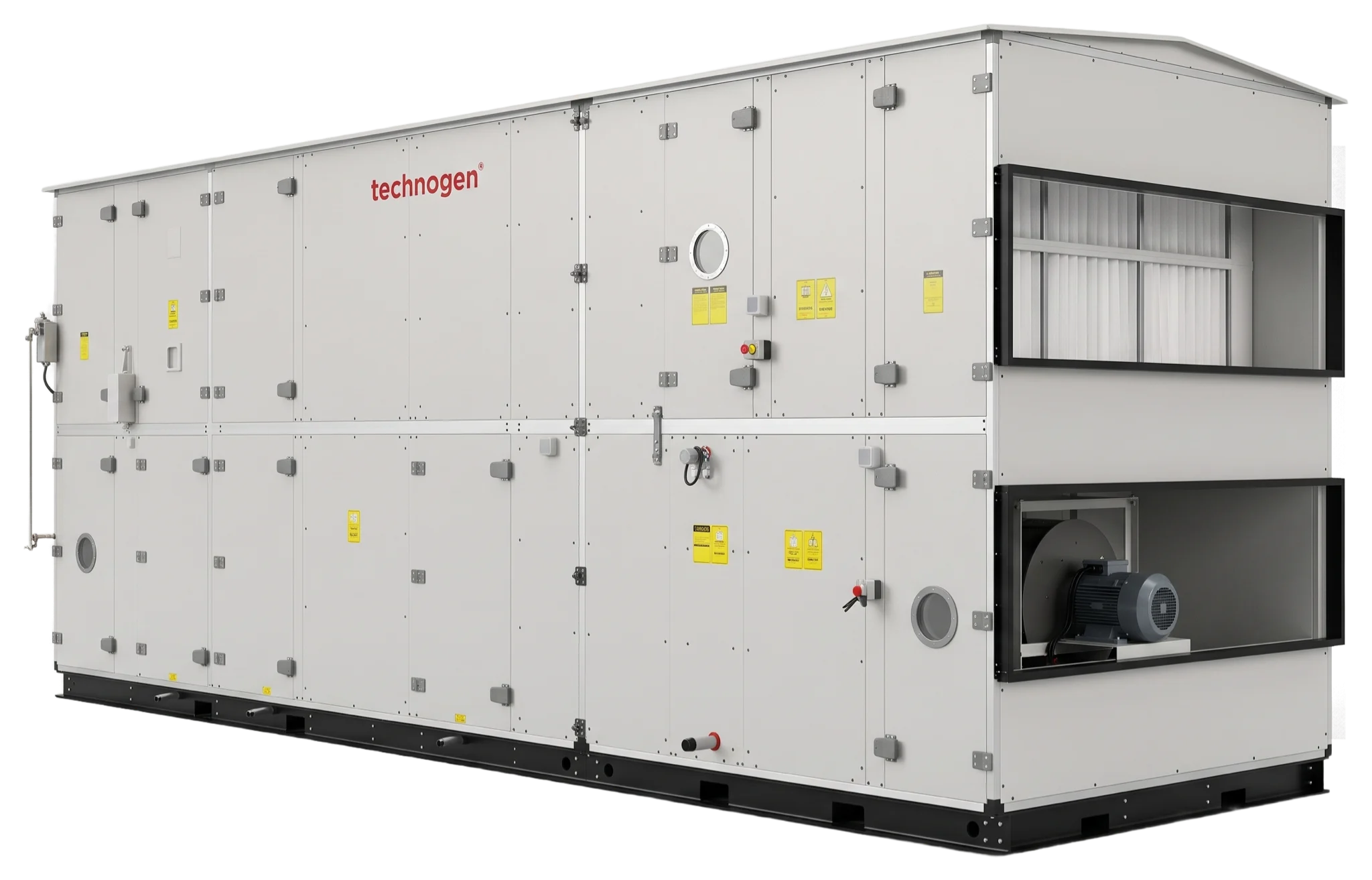
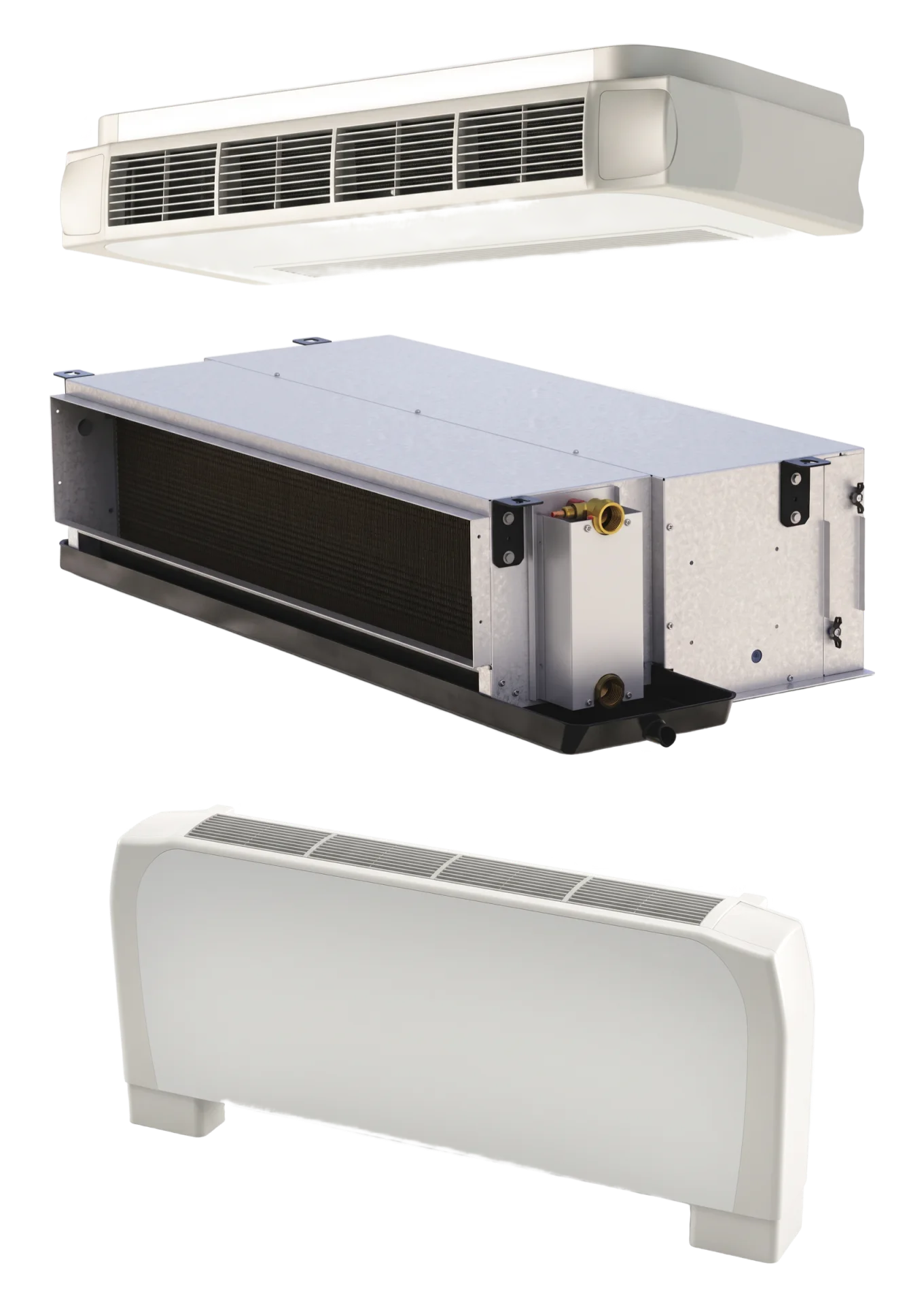
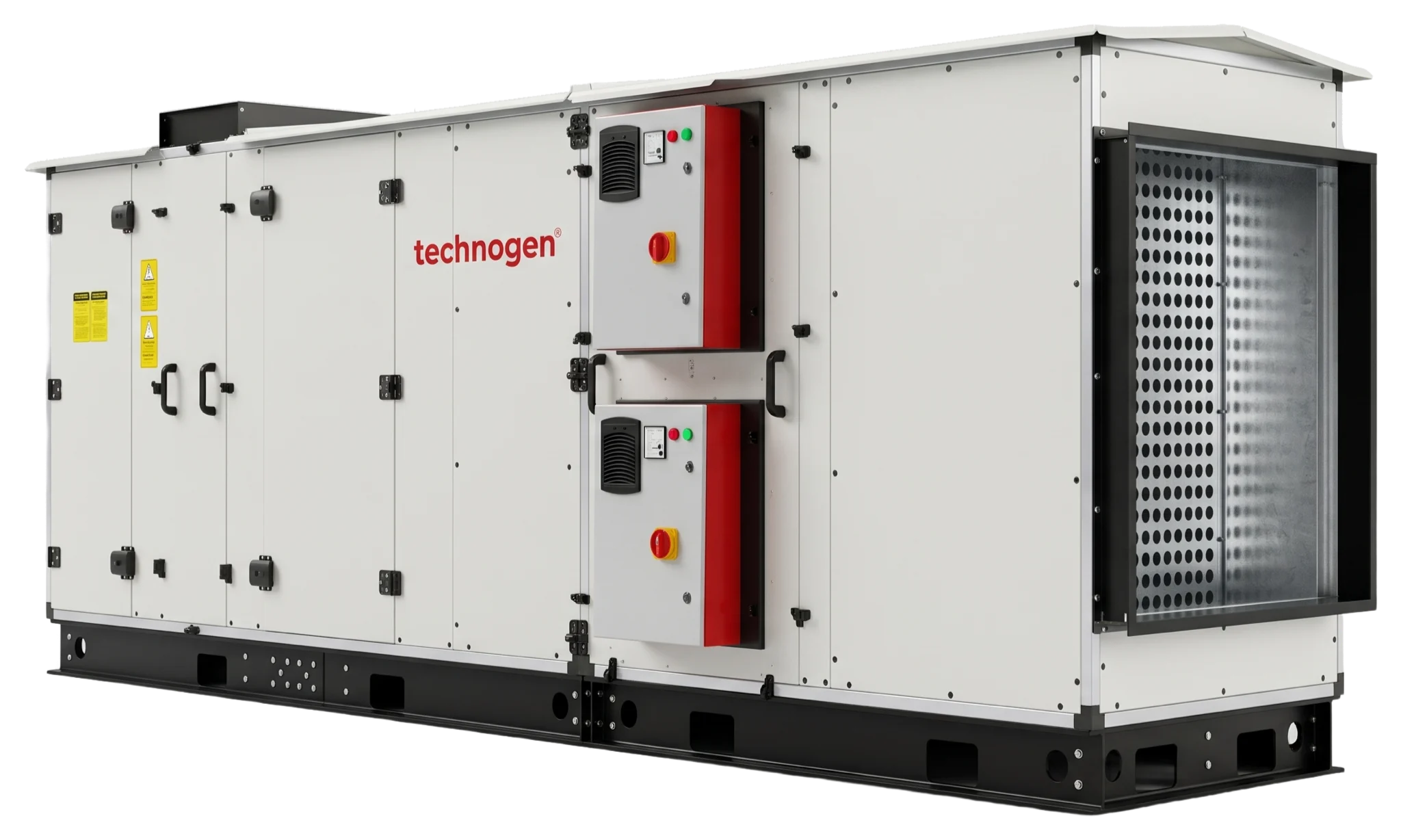
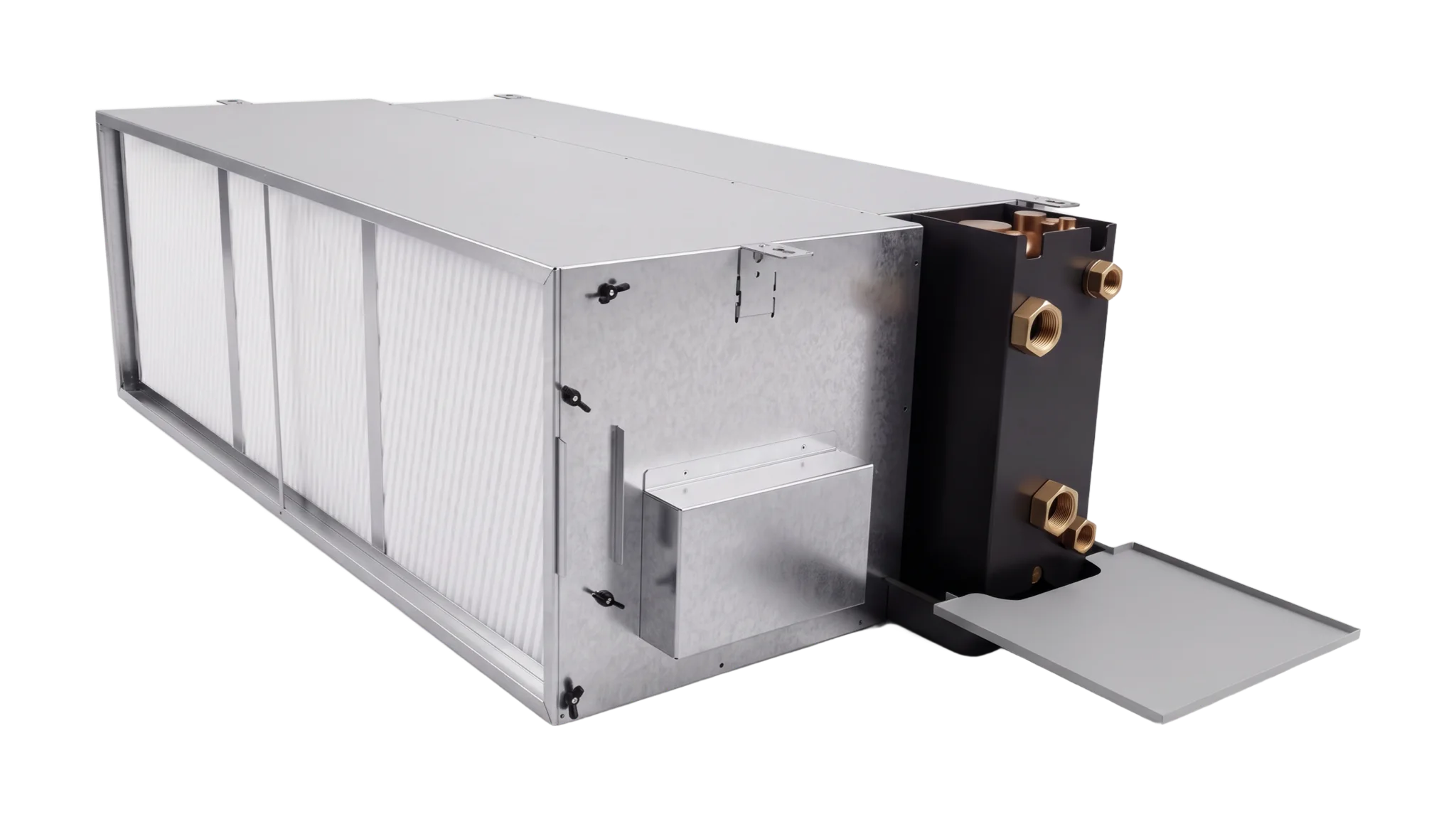
From a 60 m³/h single-room ventilator to HEROS air handling units in 62 casing sizes and SPACE rooftop units up to 25,000 m³/h. Each line has its own technical catalogue, and our engineers size the unit for your project.
Request a selection →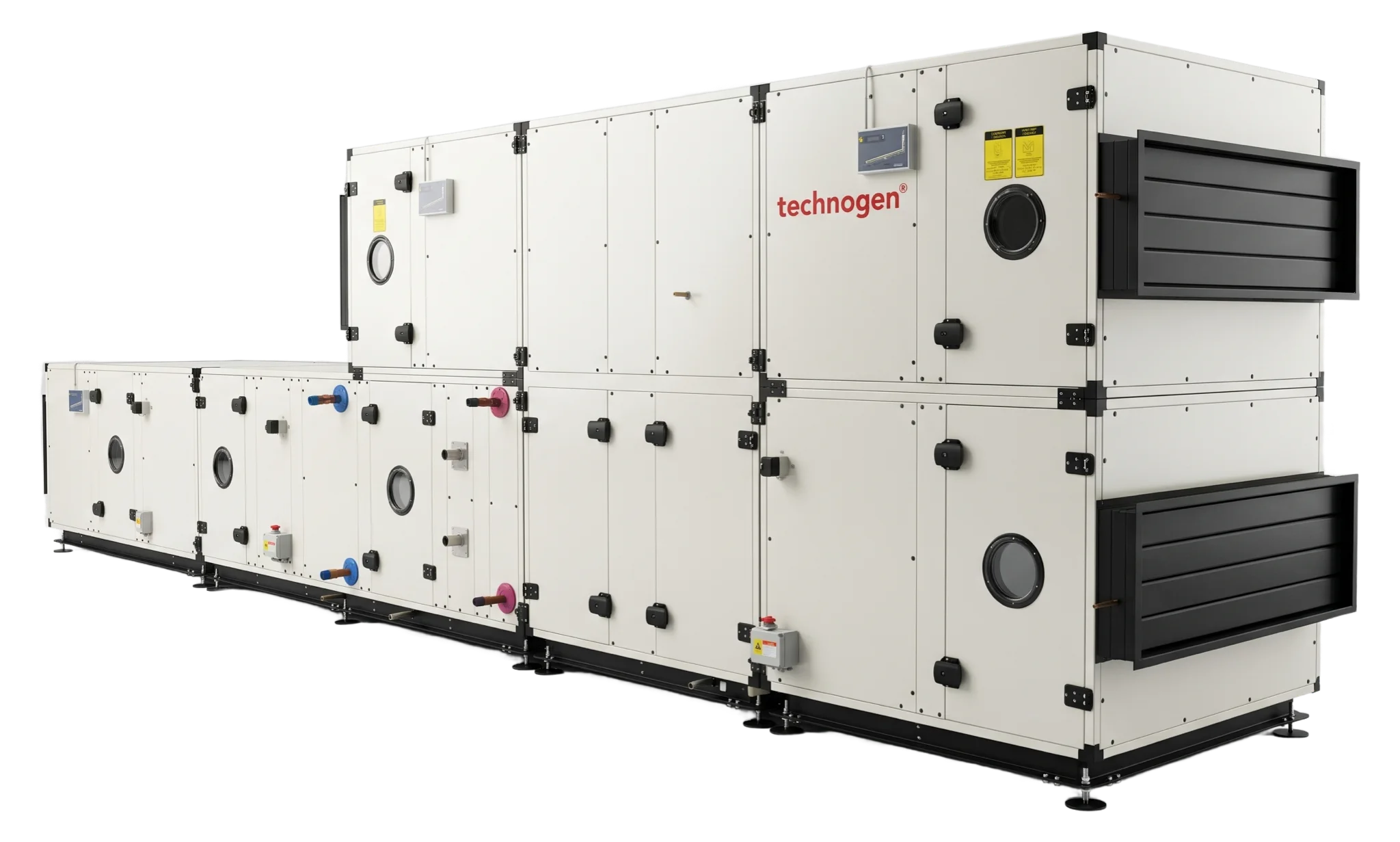
Hygienic, comfort and industrial AHUs with minimised thermal bridging and fully modular construction.
02Technology
A heat exchanger moves heat from the air leaving a building into the fresh air coming in. Heat recovery is standard on Superair, SenseAir, Zephyr and Techno-Pool, and a module option on HEROS. Move the sliders to see how much heat it returns, and how much load it takes off your plant.
76kW
thermal power returned to the supply air instead of being exhausted. Illustrative: ρ = 1.2 kg/m³, cₚ = 1.005 kJ/kg·K50 mm panels filled with 70 kg/m³ rock wool. Gaskets separate the inner and outer skins, so no metal runs straight through the panel. Tested to EN 1886: strength class D2, casing air leakage class L1.
Backward-curved plug fans, EC or AC with a VFD, on spring isolators. The motor can sit outside the casing when the project needs it.
Panel, bag, compact, activated-carbon and HEPA filters for comfort, hygienic and cleanroom applications.
A rotary wheel recovers up to 80% of the heat and can return moisture too. Plate and run-around glycol exchangers keep supply and extract air apart.
Humidity and temperature sensing, programmable scheduling, remote monitoring and building-management integration.
Seamless copper tubes and aluminium fins, with every coil pressure-tested at 20 bar before it leaves the line.
03Energy efficiency
Four figures from our catalogues, and what each one means for a building's running costs.
Heat recovery
90%
Zephyr and SenseAir take the warmth out of stale outgoing air and pass it to the fresh air coming in.
EC fans
30W
The smallest Zenair concealed unit with an EC motor moves 504 m³/h of air on 30 W.
Energy class
A+
SenseAir is rated A+. Its EC fans draw 150 W at most while the core recovers up to 90% of the heat.
Air-tight casing
L1
HEROS casings are tested to EN 1886: air leakage class L1, the tightest. Gaskets keep the two skins apart, so no metal runs straight through the panel.
04Sustainability
Over its working life, an air handling unit’s biggest carbon cost is the energy it uses. Heat recovery and efficient fans are where that is won or lost.
Heat recovery returns up to 90% of the heat in the extract air, and EC fans cut the electricity it takes to move it.
HEROS takes panel, bag and compact filters up to HEPA. On kitchen exhaust, Tecology’s electrostatic cells capture over 95% of grease and smoke before the air leaves the building.
HEROS panels with 50 mm of rock wool, Aurater coils pressure-tested at 20 bar, and Tecology ESP cells and carbon cartridges that are washed or recharged instead of thrown away.
Worked example · HEROS air handling unit
We modelled one year of a HEROS unit moving 1 m³/s of supply and extract air (3,600 m³/h) through office hours in London, with and without its rotary heat-recovery wheel.
Heating emissions fall by 80%, from 6,530 to 1,310 kg a year. The wheel adds some fan energy, so once it is fitted the fans make up most of what is left. Fan selection matters as much as the wheel.
Without heat recovery
HEROS with rotary wheel
| Source | Without heat recovery | With rotary wheel |
|---|---|---|
| Heating gas boiler | 6,530 | 1,310 |
| Supply air fan | 650 | 850 |
| Extract air fan | 650 | 850 |
| Total, kg CO₂ a year | 7,830 | 3,010 |
A worked example, not a measured result. Figures are rounded to 10 kg.
05Applications
Each guide lists the units that fit, a selection table and common questions.
Choose products by industry →
06Company
“Our goal is to become the most preferred brand in heating, cooling and ventilation, consistently delivering Smart Solutions for HVAC.” Technogen vision
R&D, production and testing in Torbalı, İzmir.
HEROS units are sized in Technogen’s AHU selection software, which produces DXF drawings and technical documents for each unit.
Every coil is pressure-tested at 20 bar. HEROS casings are tested to EN 1886: strength class D2, casing air leakage class L1.
ISO 9001 quality management and CE marking. Eurovent certification for HEROS, Superair heat exchangers and the Zenair design.
07Contact
Tell us the application, the airflow and any space limits. An engineer replies with a unit selection and the documentation.